Chapter 01: Using Standard Pronunciation
| Introduction English words can be pronounced appropriately by adhering to the principles of standard pronunciation. Standard pronunciation is the socially accepted and widely taught way of speaking clearly. In this chapter, you will practise using British English standard pronunciation when giving descriptions and engaging in conversations on various topics and in settings such as airports, migration offices, diplomatic meetings, debates, dialogues, and presentations. The competencies developed will enable you to speak clearly and confidently in formal and professional contexts. |
| Think Ways in which standard pronunciation expands opportunities worldwide |
Activity 1.1: Participating in conversations in advanced settings
(a ) Practise pronouncing each of the following words correctly. Then, create a short conversation using at least five of them and present it with clear British standard pronunciation.
| Word | IPA | Word | IPA | Word | IPA |
| comfortable | /'kʌmfə.tə.bəl/ | island | /'aɪ.lənd/ | isle | /aɪl/ |
| vegetable | /'vedʒ.tə.bəl/ | colonel | /'kɜ:.nəl/ | receipt | /rɪ'si:t/ |
| chocolate | /'tʃɒk.lət/ | choir | /'kwaɪ.ə/ | suite | /swi:t/ |
| Wednesday | /'wenz.deɪ/ | business | /'bɪz.nɪs/ | rendezvous | /'rɒn.deɪ.vu:/ |
| February | /'feb.ru.ər.i/ | genre | /'ʒɒn.rə/ | technology | /tek'nɒl.ə.dʒi/ |
| government | /'ɡʌv.ən.mənt/ | schedule | /'ʃedj.u:l/ | development | /dɪ'vel.əp.mənt/ |
| pronunciation | /prə,nʌn.si'eɪ.ʃən/ | literature | /'lɪt.rə.tʃə/ | cupboard | /'kʌb.əd/ |
| accept | /ək'sept/ | except | /ɪk'sept/ | said | /sed/ |
| saying | /'seɪ.ɪŋ/ | affect | /ə'fekt/ | effect | /ɪ'fekt/ |
| coast | /kəʊst/ | cost | /kɒst/ | debt | /det/ |
| examine | /ɪɡ'zæm.ɪn/ | determine | /dɪ'tɜ:.mɪn/ | ensure | /ɪn'ʃʊə/ |
(b) Read the dialogue aloud, focusing on the correct pronunciation of words such as departure, schedule, luggage, confirm, gate, and announcement.
Passenger: Good morning, Madam. Could you kindly assist me? I'm travelling to Green City, but I'm not certain which gate the flight is boarding from.
Airport Information Officer: Good morning, Sir. Let me check that for you. [After a few moments...] Yes, the Tanzania Airways flight to Green City is boarding from Gate 12. You'll need to go through security first, then follow the signs to the departure lounge.
Passenger: Thank you very much. Could you also confirm whether the flight is on schedule? I heard some passengers mention a possible delay.
Airport Information Officer: According to our system, the flight is expected to depart at 10:30 am as planned. However, in the event of any change, you will be notified via the information screens and the public address system.
Passenger: That's reassuring. May I also know if hand luggage is being checked separately?
Airport Information Officer: Yes. Please, place your hand luggage on the scanner when you reach security. Larger bags must be checked in at the counter. Do you have any liquids in your carry-on?
Passenger: Only a small bottle of water.
Airport Information Officer: That must be emptied before boarding. Drinking water is available in the lounge.
Passenger: Understood. Thank you for your guidance.
(c) Role-play the dialogue, practising the correct pronunciation of words such as application, processing, notification, and admission. Thereafter, create your conversation about applying for a passport renewal or visa extension.
Tazameni: Good afternoon. I want to apply for a study permit, as I have been admitted to a university in the country.
Immigration Officer: Good afternoon. Congratulations on your admission. May I see your passport and admission letter, please?
Tazameni: Certainly, here you go. Could you please explain the requirements for the study permit?
Immigration Officer: Of course. In addition to your passport and admission letter, you will need proof of financial support, two passport-sized photographs, and a completed application form. There is also a processing fee, which must be paid before we begin.
Tazameni: I see. And how long does the process usually take?
Immigration Officer: The average processing time is two weeks. Once your permit is ready, you will receive a notification by email or text message.
Tazameni: That's reasonable. In the meantime, may I attend classes while I wait for the permit?
Immigration Officer: You may begin attending classes, but you must carry proof that your application has been submitted.
Tazameni: Thank you very much for clarifying. I appreciate your assistance.
Immigration Officer: It's my pleasure. Please complete this form at the counter, and we shall begin processing your application.
(d) Read the dialogue aloud, paying close attention to the correct pronunciation of words. Then, prepare your own short diplomatic exchange using at least five words from the pronunciation list in (a).
Diplomat A: Your Excellency, may I extend my sincere gratitude for hosting us today? The government I represent values these discussions as an important step towards stronger cooperation.
Diplomat B: It is truly our pleasure. We believe this meeting will open doors for development in education, business, and cultural exchange programmes. We also wish to establish a clear schedule for joint activities.
Diplomat A: Indeed. We're particularly interested in academic collaboration. For example, our universities could share literature resources and introduce exchange programmes in technology and science. This would greatly benefit both nations.
Diplomat B: That's an excellent idea. In addition, our students can participate in programmes focused on business and entrepreneurship. We also hope to create opportunities for conferences on history, language, and culture.
Diplomat A: I fully agree. Although such projects may face challenges, the benefits outweigh the difficulties. Clear communication, respect, and planning will ensure success.
Diplomat B: Certainly. Let us therefore continue to work together for mutual benefit, strengthening not only trade but also friendship between our peoples.
(e) Read the dialogue aloud, paying close attention to the correct pronunciation of words such as suite, comfortable, confirm, reservation, shuttle, and schedule. Afterwards, create your hotel check-in conversation, adding at least four words from the pronunciation list.
Guest: Good evening. I have a reservation under the name MsNtuliKibona.
Receptionist: Good evening, MsKibona. Please, let me check [After a few moments ...] Yes, here it is. You have booked a suite for three nights, including breakfast.
Guest: That's correct. Could you please confirm if the suite is comfortable and whether it has internet access? I will need to do some business work during my stay.
Receptionist: Yes, Madam. The suite is fully furnished, with a comfortable bed, a work desk, and Wi-Fi. There is also a small library if you would like to read in your free time.
Guest: That sounds excellent. Could you also tell me the meal schedule and any additional hotel services?
Receptionist: Sure! Breakfast is served from 7:00 to 10:00 am in the dining hall, lunch from 12:30 to 2:00 pm, and dinner from 7:00 to 9:00 pm. We also offer a free city tour tomorrow afternoon, focusing on history and technology—a favourite experience for many of our guests.
Guest: Wonderful! One last question—do you provide transport to the airport?
Receptionist: Yes, we do. Please inform us at least one day in advance, and we will arrange a shuttle to the airport at no extra charge.
Guest: Thank you very much. This seems like a very well-organised hotel.
Receptionist: You're most welcome. We wish you a pleasant and memorable stay.
(f) Read the following dialogue aloud, focusing on the correct pronunciation of words such as island, isle, cost, coast, accept, except, examine, and said.
Director: Good morning, colleagues. As we proceed with preparations for the National Environmental Research Conference, we must first examine the proposed venues. One option is Kisiwa Island, while the other is the smaller Isle of Mwangani, just off the coast.
Coordinator: Thank you, Director. I've compared the cost of hosting the event in both locations. Kisiwa Island is more expensive, but it offers better accommodation. Mwangani Isle is cheaper, except that transport would be more complicated.
Senior Scientist: I’d accept either venue, but I must point out that environmental conditions may affect access to the islands. Heavy winds can sometimes affect ferry schedules directly.
Director: That’s a valid concern. We must also ensure that our equipment and all scientific materials are protected against loss or damage.
Coordinator: Understood. Additionally, security officials have warned us against any illicit activities by some local fishermen near Mwangani. We’ll need to plan accordingly.
Senior Scientist: On another matter, the keynote speech aims to elicit strong public interest in marine conservation. I’d like the speaker to highlight how unmanaged tourism can negatively affect coastal ecosystems.
Director: Excellent suggestion. Regarding the conference programme, the academic committee will examine all submissions before finalising the examination schedule for student presentations.
Coordinator: Director, about the press briefing—reporters asked for a clear statement. One journalist said that people were confused about the venue change. What should we be saying to avoid misunderstandings?
Director: Please inform them that the final decision will be announced tomorrow. Until then, we are still evaluating both locations thoroughly.
Senior Scientist: Very well. I believe we now have a clearer direction for the next steps.
Activity 1.2 Recounting events on various topics using standard pronunciation
(a) Read the text aloud, focusing on the correct pronunciation of words such as independence, responsibility, determination, agriculture, and familyhood. Then, prepare and present a short text about a historical event from your family or community.
In December 1961, Tanganyika gained independence from British colonial rule. This historic moment was more than just the lowering of one flag and the raising of another. It symbolised the beginning of a new era for millions of citizens who had long dreamed of freedom. Crowds filled stadiums and streets, waving banners and singing songs of unity. In Dar es Salaam, Hon. Julius Nyerere, the First Prime Minister, addressed the nation with words that emphasised peace, hard work, and responsibility. He reminded the people that independence was not the end of the struggle but the beginning of a greater task: building a strong and self-reliant nation.
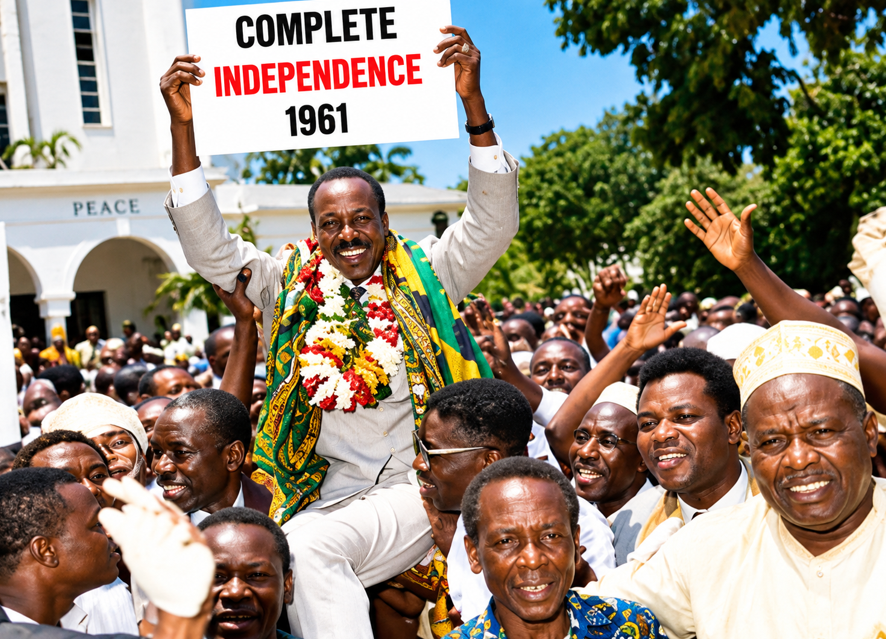
Following independence, new priorities emerged. Schools were opened in rural areas, hospitals were expanded, and efforts were made to modernise agriculture. Although resources were limited, there was a strong sense of hope and determination. Communities came together in the spirit of ujamaa or familyhood to support one another in the task of nation-building.
Today, the independence of Tanganyika, which later united with Zanzibar to form Tanzania in 1964, is remembered as a landmark event in African history. It stands as a reminder of the sacrifices made by earlier generations and the responsibility of future generations to protect peace, unity, and dignity.
(b) Read the following narration aloud, paying attention to words such as generation, missionaries, forgiveness, diversity, and harmony. Afterwards, prepare and present a short text on how religion influences daily life in your community, using clear pronunciation.
Religion has been a guiding force in Tanzania’s cultural and social life for centuries. Islam was first introduced along the East African coast through trade with Arab merchants as early as the 8th century. Towns such as Kilwa, Bagamoyo, and Zanzibar became important centres of Islamic learning, where mosques were built, and teachings on justice, compassion, and community life were passed down from one generation to the next. Over time, Islam spread inland, shaping traditions, festivals, and moral values.
Christianity arrived later, mainly in the 19th century, through European missionaries who established schools, health centres, and churches. These missions played animportant role in literacy and education, introducing reading and writing to many local communities. The Christian message of service, charity, and forgiveness influenced social work, including care for the poor and the sick. Like Islam, Christianity became deeply rooted, not only as a religion but also as a source of guidance for daily living.
Today, Tanzania is home to both Muslims and Christians, along with followers of other faiths. Mosques, churches, and traditional places of worship can be found across the country, symbolising religious diversity. Despite doctrinal differences, the values of peace, love, and unity are shared across faiths. Religion continues to inspire music, art, and education, while also promoting dialogue and understanding. This balance has helped Tanzania maintain harmony among its people, making religion not only a matter of faith but also a foundation of national identity.
(c) Read the following text aloud, focusing on the correct pronunciation of words such as heritage, vaccination, hypertension, prevention, and communities. Then, prepare and present a short text on how medicine or healthcare has improved life in your own area.
The history of medicine in Tanzania reflects a journey from traditional healing practices to modern healthcare systems. For centuries, local communities relied on herbal remedies, midwives, and spiritual healers to treat illnesses. Plants such as neem, ginger, and aloe vera were commonly used for treating fever, stomach problems, and skin infections. These practices were passed down orally and formed part of the cultural heritage of different tribes.
With the arrival of colonial powers in the late 19th century, Western medicine was introduced through hospitals and clinics. Missionary organisations built some of the earliest hospitals, providing vaccination programmes and training local nurses. Although these services were limited, they marked the beginning of formal healthcare in the region. After independence in 1961, the government expanded health services by building district hospitals, establishing medical schools, and launching campaigns against malaria, smallpox, and polio.
Today, Tanzania’s health system combines both modern and traditional approaches. Modern hospitals treat complex diseases such as cancer and hypertension, while traditional medicine is still respected, especially in rural areas. The Ministry of Health works with international organisations to improve access to vaccines, medicine, and technology. Although challenges such as limited resources and high patient numbers persist, progress continues.
Medicine in Tanzania is not only about treating diseases; it is also about prevention, education, and promoting healthier lifestyles. This narrative shows the importance of balancing cultural traditions with scientific knowledge to protect the community’s well-being.
(d) Read the following text aloud, focusing on the correct pronunciation of words such as diagnosing, pharmaceutical, vaccination, prevention, and innovation. Afterwards, prepare and present a short text on how medicine has helped your community recently.
Medicine is one of the most important fields for human survival because it focuses on preventing, diagnosing, and treating diseases. In modern hospitals, doctors and nurses use advanced technologies, such as X-ray and ultrasound machines, as well as laboratory equipment, to identify illnesses quickly and accurately. This helps them decide which treatment is most effective for the patient. In addition to physical therapy, medicine also includes mental health care, since health problems such as stress, depression, and anxiety affect overall well-being.
Pharmaceutical companies produce medicines that treat infections, relieve pain, and manage chronic diseases such as diabetes, hypertension, and asthma. Vaccination programmes are also essential, as they protect entire communities from dangerous diseases like measles, polio, and COVID-19. Alongside these modern practices, traditional medicine continues to play a role in many societies, where herbs and natural remedies are used to relieve symptoms and promote healing.
Medicine is not only about curing the sick but also about prevention. Public health campaigns encourage people to wash their hands, eat balanced diets, exercise regularly, and attend health check-ups. These small actions reduce the spread of disease and promote healthier lifestyles.
The future of medicine is exciting, with research in genetics, artificial intelligence, and telemedicine opening new possibilities for treatment. With continued innovation and education, medicine will remain a powerful tool in protecting lives and improving the quality of health worldwide.
Activity 1.3 Participating in dialogues, debates, and meetings on topical and crosscutting issues
(a) Read the following dialogue aloud, focusing on the correct pronunciation of words such as predictable, temperatures, alarming, renewable, and pollution. Then create an extended dialogue on another topical issue, such as technology, health, or corruption.
Asha: I believe climate change is already affecting us. The rains are no longer predictable, and many farmers in rural areas are struggling to grow enough food.
Brian: That’s true. However, some people still argue that it’s just a natural cycle and that the world has always experienced climate change.
Asha: But if it were just a natural cycle, why are global temperatures rising so quickly? Scientists have provided clear evidence that human activities, such as burning fuel and cutting down forests, are accelerating the problem.
Brian: Good point. I have also read reports that the snow on Mount Kilimanjaro is melting at an alarming rate. If this continues, our rivers may dry up.
Asha: Exactly. And that will affect not only farming but also electricity, as a significant portion of our power comes from water. Without action, the whole world could face severe shortages.
Brian: I think schools should teach more about environmental protection. If young people learn early, they will be more mindful of water, trees, and energy.
Asha: Yes, and the government should encourage renewable energy. Solar power and wind power are safer for the environment, even though they require heavy investment.
Brian: It’s everyone’s responsibility. Communities must plant more trees, families must reduce waste, and industries must control pollution. Climate change will not disappear on its own.
Asha: I agree. Change begins with awareness, and awareness starts with clear communication.
(b) Debate on the following topics while focusing on the correct pronunciation of words.
1. Social media offers more benefits than drawbacks for young people.
2. Climate change is the greatest challenge facing Tanzania today.
3. Mobile phones should be allowed in all secondary schools.
4. Corruption is the main obstacle to national development.
5. Technology is diminishing, rather than strengthening, human relationships.
6. Gender parity has been achieved in Tanzania.
(c) Design and role-play a meeting discussing how to improve student performance. Take turns as the chairperson and members, ensuring correct pronunciation of words such as "strategies," "academic," "mentoring," and "involvement."
(d) Use an ICT device to practise pronunciation of vocabulary used in different fields of specialisation.
(e) Imagine you are giving a short speech at a school event. Write two paragraphs of 5–6 sentences and read them aloud with careful pronunciation, paying attention to stress and intonation.
www.learninghubtz.co.tz
Revision Exercise
1. List five situations in professional or social life where poor pronunciation could cause serious misunderstandings.
2. Read a short news article of your choice aloud to a partner. Afterwards, ask them to note three words where your pronunciation needs improvement.
3. Many people confuse the pronunciation of the following words: cache, colonel, debris, subtle, athlete, desert and hyperbole. Look up their meanings in a dictionary and write three sentences using such words. Then, practise pronouncing them correctly.
4. Some English words are pronounced very differently from their spelling (e.g., colonel, choir, thumb, aisle, psychology, honest, plumber, and debt). Choose three such words and explain why they are confusing to some students.
5. Record yourself narrating a two-minute passage on a topic of your choice (e.g., history, science, or daily life experience). Listen to the recording and identify at least two areas where your pronunciation could improve.
6. Reflect in writing: How do the competences you gained in this chapter (dialogues, narrations, debates, and meetings) help prepare you for real-life communication beyond the classroom?

Hub App
 For Call,Sms&WhatsApp: 255769929722 / 255754805256

For Call,Sms&WhatsApp: 255769929722 / 255754805256 WHATSAPP US NOW FOR ANY QUERY
 MATOKEO YA KIDATO CHA VI 2026
SECONDARY REGIONAL EXAMS
PRIMARY REGIONAL EXAMS
FORM VI NECTA REVIEWS
FORM IV NECTA REVIEWS
FORM II NECTA REVIEWS
STD VII NECTA REVIEWS
STD IV NECTA REVIEWS
SECONDARY EXAMS SERIES
PRIMARY EXAMS SERIES
PRIMARY SUBJECT NOTES
SECONDARY SUBJECT NOTES
SECONDARY TOPICAL EXAMS
SECONDARY TOPICAL QUESTIONS
PRIMARY TOPICAL QUESTIONS
PRACTICAL EXAMS & NOTES
SECONDARY REGIONAL EXAMS
DOWNLOAD SUBJECT NOTES
SCHEMES OF WORK (PRIMARY & SECONDARY)
LESSON PLAN
SECONDARY LOG BOOKS
PRIMARY LOG BOOKS
LITERARY WORKS / UCHAMBUZI VITABU
METHALI ZOTE ZA KISWAHILI
Vitendawili Vya Kiswahili
FORM VI RESULTS 2024
FORM FIVE SELECTION 2024
Matokeo KIDATO CHA II 2024
Matokeo Darasa IV 2024
MATOKEO KIDATO CHA IV 2023
FORM ONE SELECTION 2024
FORM VI RESULTS 2023
Matokeo Darasa IV 2022
App Ya Learning Hub Tanzania