| Introduction Earth is our home, the Mother Nature where all human beings and other living things live. While living on the planet Earth, we have to study and understand our environment. We must seek to understand how geographical phenomena happen, where they are found, why they are there, and how they develop and change over time and space. To understand all these things, you need to study Geography. In this regard, this chapter introduces you to the concept of Geography, branches of Geography, and the importance of studying Geography. Also, you will learn about the relationship between Geography and other disciplines. The competencies developed will enable you to appreciate the importance of Geography, and apply the knowledge to other disciplines. This will enable you to solve problems associated with natural and man-made processes and activities. |
| Think Man’s survival in the environment |
Concept of Geography
| Activity 1.1 Search for information from the library and other reliable online sources on the meanings of Geography. Make short notes, then develop your own definition of Geography. |
The word ‘geography’ comes from two Greek words geo which means the Earth and graphein or grapho which means to draw, describe or write. The two words are joined to form one word “geographia”, which means “writing about the Earth.”
Therefore, Geography is the science that describes the Earth.
The term ‘geography’ was first used in 240 B.C by a Greek philosopher Eratosthenes who is regarded as “the father of geography”. He published a book about the Earth and named it Geography. According to Eratosthenes, geography is defined as writing about the planet Earth. The book contributed a lot to the understanding of the Earth and the universe. Based on that origin, Geography has been understood as the study of man and his surroundings. It is concerned with the study of the size, shape,
and movements of the Earth in relation to other heavenly bodies. Also, Geography deals with landmasses, water bodies, climate, vegetation, human activities, and events in different places of the world. Geography focuses on the description of Earth and its features, and the distribution of life on it. This includes human life and the effects of human activities on the Earth. Therefore, Geography is the scientific study of physical characteristics of the Earth and their influence on human life and activities.
| Activity 1.2 Search for information about physical features including simulations, videos, or animations from other reliable sources, and note down any features observed. |
Branches of Geography
Every day, man explores different things, including the earth’s landscapes, climate, people, and places as he or she navigates through wide and varied aspects of geography. The exploration allows man to know different regions, countries, continents, and the amazing physical and man-made features. Geography opens up a world of endless exploration from understanding the wonders of nature like mountains, rivers, and forests. Furthermore, geography renders the exploration of economic activities, population and man-made creations such as cities. Therefore, this exploration enables man to make a clear distinction between the physical aspects and human aspects.
| Activity 1.3
|
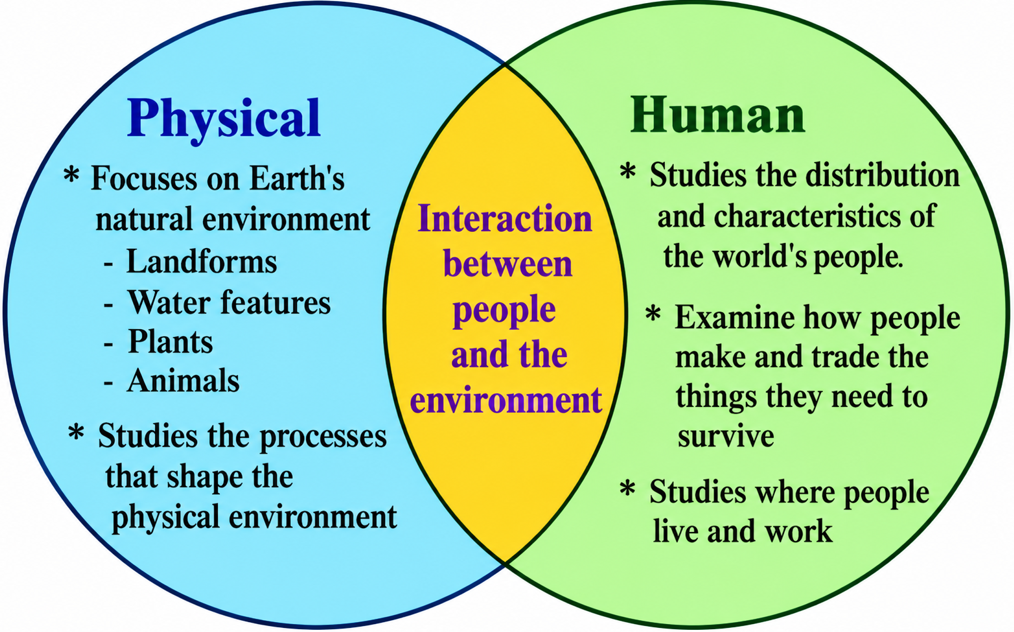
Geography has two major branches, namely physical geography and human geography. Physical geography is involved with the study of natural features of the Earth. It focuses on the structure of the earth, atmospheric processes, and the formation and distribution of landforms such as mountains, valleys, and plateaus. It also studies the distribution of plants and animals (flora and fauna) on the earth’s surface.
Human geography is concerned with the study of man-made features found on the earth’s surface. It also deals with interaction between human beings and the environment. Furthermore, it studies human population aspects such as population structure, distribution, growth, settlement, and human activities.
The two major branches of geography need geographical skills and techniques that are covered under the technique known as practical geography. Practical geography deals with geographical techniques, which support scientific approaches to collecting, recording, storing, analysing and interpreting geographical data. It is potential in understanding physical and human geography through the study of cartography, photography, Geographical,Information System (GIS), research, survey, remote sensing, and statistics. Practical geography also helps learners acquire skills that enhance their curiosity and ability to understand both physical and human geography (Figure 1.1).
|
Figure 1.1: Branches of Geography |
| Activity 1.4 Search for information from the library and other reliable online sources on the main branches of Geography, namely physical geography and human geography. Then, write a short essay on what each branch is concerned with. |
Exercise 1.1
- With examples, differentiate natural features from man-made features within your surroundings.
- How does physical geography contribute to our understanding of the Earth?
- Why is practical geography important in studying physical geography and human geography?
Importance of studying Geography
| Activity 1.5 Read from different reliable online sources about the importance of studying Geography to human life. Write a summary on the importance of Geography to human life. |
The study of Geography is important because it increases awareness of our country as our national heritage, including its boundaries and resources. It helps to develop basic skills of observation, measurement, recording, storing, analysing, and interpreting geographical phenomena. These skills help to generate scientific knowledge that enables us to predict outcomes of different processes and activities for appropriate decision making. Geography also helps us understand our
culture and how it differs from other cultures. This can help us be more tolerant and cope with others nationally and internationally. Also, by studying the geography of other countries and their human interactions, it can help us gain knowledge and skills for improving ways of utilising our resources for our development.
Moreover, Geography equips man with skills for environmental conservation and management. These skills are for appropriate use of environmental resources and methods for managing associated problems for the wellbeing of the present and future generations. Geography gives us practical skills and knowledge, which are relevant in various fields, like map-making (cartography), teaching and researching, surveying, land use planning, natural resources management, conducting environmental and social impact assessment, aviation, navigation, surface transport, and tourism.
Furthermore, Geography helps to realise the natural resources are distributed over the country. For instance, by studying maps of natural gas reserves in Tanzania will help us understand how much gas we have, how long it will last, and decide on investing on alternative energy sources. Geography helps to realise why some areas are highly populated while others are sparsely populated, and why some economic activities are mostly found in certain areas than in others.
| Activity 1.6 Prepare a morning speech to be presented before your fellow students regarding the problems that may arise in case of lacking geographical knowledge and skills. |
Exercise
1. Explain how Geographical knowledge helps us protect the environment in our local community.
2. How does geographical knowledge help us in travelling and tourism?
3. In what ways can geography help us make appropriate decisions about land use and development?
4. Explain how human geography helps in undertaking different social and economic activities in Tanzania.
5. Explain the activities you do in your daily life that uses the geographical knowledge you have learnt in school.
The relationship between Geography and other disciplines
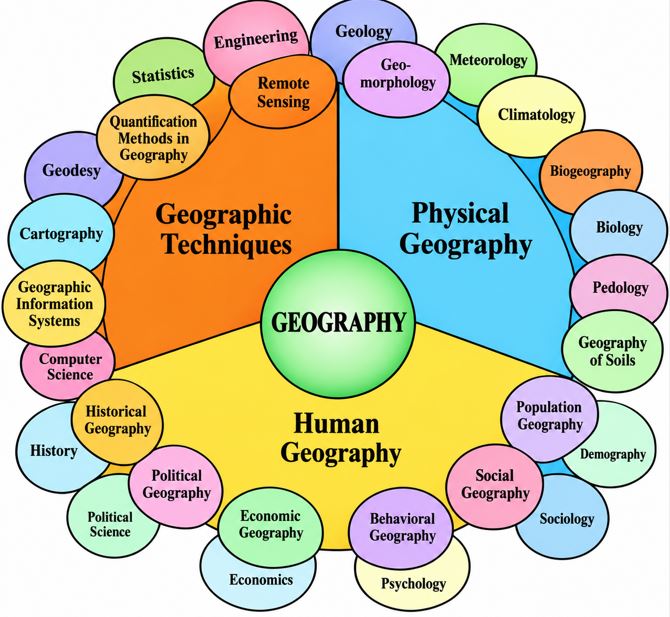
Geography as a subject is related to other disciplines. Geography as an integrative discipline relates to serves several other disciplines. Such disciplines include Mathematics, Geology, Biology, Astronomy, Physics, Chemistry, Political science, Economics, and Agriculture. For instance, Astronomers who study about heavenly bodies like stars, planets, comets, galaxies, and the moon use geographical knowledge and skills to undertake their explorations. When studying about soil science and geology, Geography gives a basis for understanding and analysing the type, structure, and compositions of soils and rocks. Moreover, while study about forces of gravity in Physics, scientists use geographical knowledge to explain these forces.
Sometimes as an interdisciplinary field, Geography provides other concepts in social sciences. For example, when studying human culture, Geography provides a basis for understanding spatial distribution and how people interact with the environment. Geography is also related to political science, especially when describing political boundaries, regions, population size and distribution of resources in different locations. Figure 1.2 illustrates the relationship between Geography and other disciplines.
|
Figure 1.2: Relationship between Geography and other disciplines |
| Activity 1.7 Visit a nearby area and observe different activities carried out. Make a list of activities, then:
|
Exercise
Answer the following questions.
1. Hekima is a Form One student interested to be a pilot. His teacher encourages him to study hard and ensure he performs well in Geography, Physics, Mathematics and language subjects. Hekima’s friends also advise him that, besides being a pilot, he can also become a cartographer, surveyor, environmental expert, geologist, astronomer, meteorologist. Write an essay to explain Hekima’s interest in becoming a pilot in relation to the Geography subject.
2. Give reasons why the following career paths require specific geographical knowledge?
- Weather forecasting
- Map making and interpretation
- Planning and organisation of cities
- Aviation
- Photographer
Exercise – Answers
Answer the following questions.
1. Hekima's interest in becoming a pilot in relation to Geography
Geography is the scientific study of the Earth, its physical features, human activities and the relationship between human beings and their environment. Geography is important to Hekima because it provides knowledge and skills required in aviation.
- Understanding weather conditions: Geography helps pilots understand rainfall, wind, clouds and storms, enabling them to make safe flight decisions.
- Navigation skills: Geography enables pilots to identify directions, locations and flight routes.
- Map interpretation: Geography helps pilots read and interpret maps used in planning flight routes.
- Understanding physical features: Geography enables pilots to identify mountains, valleys and other landforms that may affect flight safety.
- Understanding the Earth's characteristics: Geography helps pilots understand the Earth's shape, size and movements, which are relevant to navigation.
- Environmental awareness: Geography helps pilots understand environmental conditions that may influence aviation activities.
Conclusion: Geography provides essential knowledge and skills for aviation. Therefore, Hekima should study Geography together with Physics, Mathematics and languages to prepare for his future career as a pilot.
2. Reasons why different career paths require geographical knowledge
- Weather forecasting: Geographical knowledge helps meteorologists study atmospheric conditions such as temperature, rainfall, wind and humidity to predict weather changes.
- Map making and interpretation: Geography provides cartographers with skills for collecting geographical information, representing physical and human features on maps, and interpreting geographical locations.
- Planning and organisation of cities: Geography helps urban planners identify suitable areas for settlements, roads, industries and public services while considering environmental conditions.
- Aviation: Geographical knowledge helps pilots understand weather conditions, interpret maps, identify directions and plan safe flight routes.
- Photography: Geography helps photographers understand landscapes, physical features and environmental conditions when capturing and interpreting geographical photographs.
www.learninghubtz.co.tz
Revision exercise
1. Choose the correct answer for each of the following items. (10 marks)
(i) The word Geography originates from Greek words meaning
- study of the atmosphere
- writing about the Earth
- measurement of population
- study of living organisms
(ii) Who is regarded as the father of Geography?
- Aristotle
- Newton
- Eratosthenes
- Galileo
(iii) Which pair represents the two major branches of Geography?
- Geology and Astronomy
- Physical Geography and Human Geography
- Biology and Chemistry
- Cartography and Statistics
(iv) Which of the following is a natural geographical feature?
- Bridge
- Factory
- Mountain
- Road
(v) The study of population distribution and settlements belongs mainly to
- Physical Geography
- Human Geography
- Geology
- Astronomy
(vi) Which geographical technique is mainly concerned with making maps?
- Cartography
- Climatology
- Geology
- Ecology
(vii) A geographer collecting, recording and analysing information is applying skills associated with
- Human Geography only
- Practical Geography
- Political Science only
- Astronomy only
(viii) Which career most directly uses geographical knowledge to plan the use of land in towns?
- Musician
- Urban planner
- Tailor
- Chef
(ix) Geography is related to Biology because both subjects can study
- plants, animals and their environments
- only political boundaries
- only mathematical equations
- only industrial machinery
(x) Knowledge of the distribution of natural resources helps a country mainly to
- ignore environmental problems
- stop all economic activities
- make informed development decisions
- avoid studying other countries
2. Match the items in List A with the correct descriptions in List B. (5 marks)
| List A | List B |
|---|---|
|
|
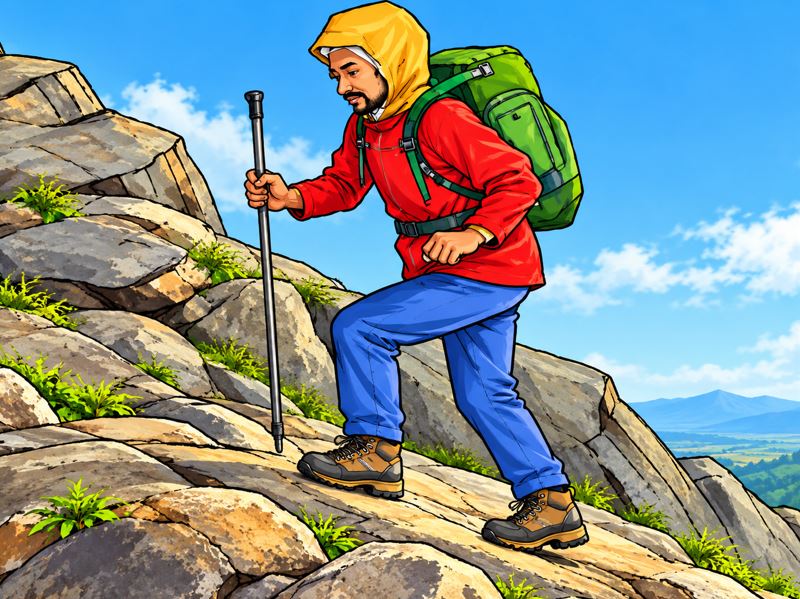
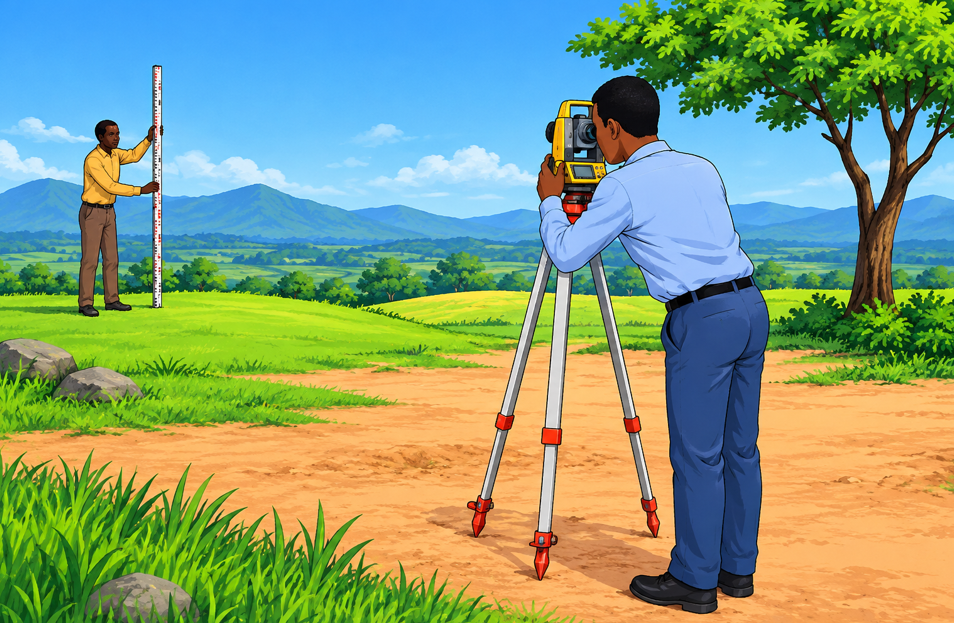
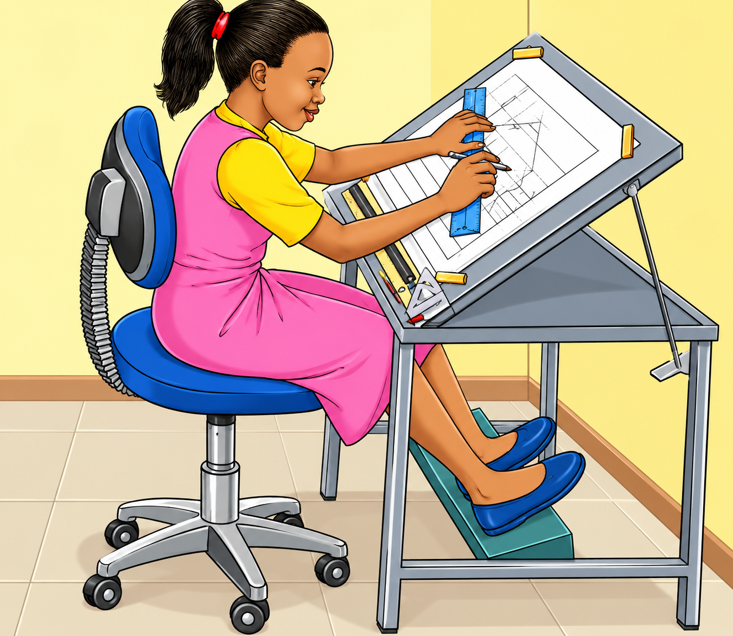
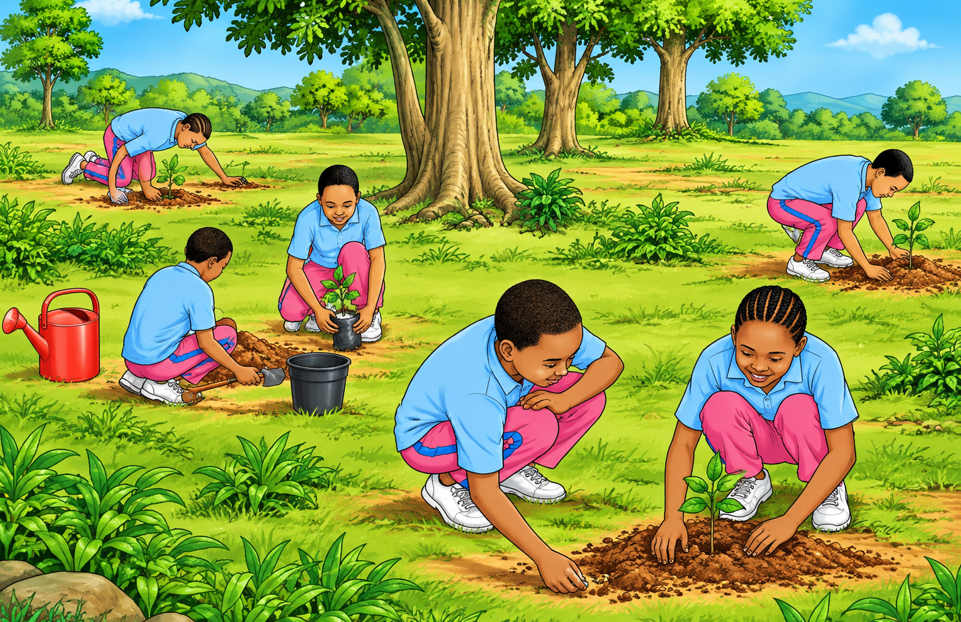
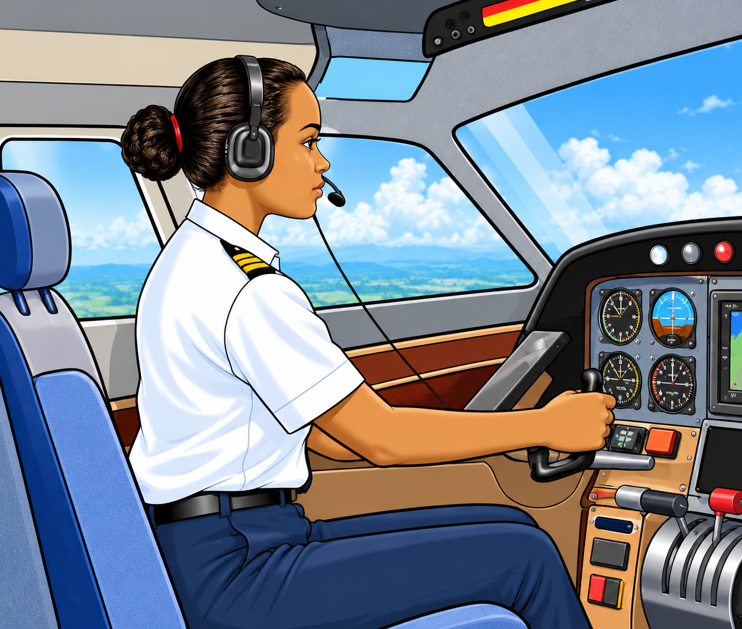
3.(a)Study the pictures (a) to (f) and explain how they relate to the use of geographical knowledge.
(b)
(c)
(d)
(e)
(f)
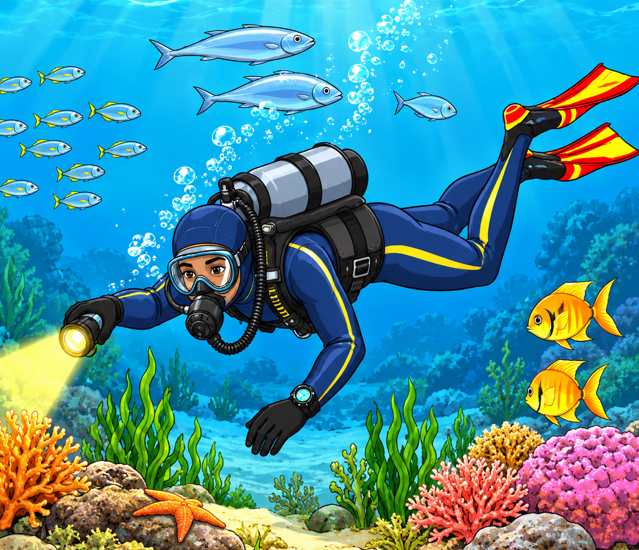
4. Read the following statements carefully, then group them into branches of Geography:
- Studying the behaviour of stars in the sky.
- Analysis of population structure and migration.
- Studying about manufacturing industry in Tanzania.
- Understanding physical features and their change in time and space.
5. Mention two geographical techniques that help geographers to conduct their practical work.
6. Explain how geographical knowledge influences people’s settlements.
7. (a) Explain how Geography is related to each of the following disciplines: Biology, Mathematics and Geology.
(b) Explain two ways Geography supports the work of a pilot.
8. A district authority plans to establish a new settlement near a river and a forest.
(a) Identify two geographical factors the authority should consider before choosing the settlement site.
(b) Explain four ways geographical knowledge can help the authority make appropriate land-use decisions.
9. “Geography is important in the daily life of every Tanzanian.” Justify this statement by explaining five ways Geography helps people solve problems and improve their lives.
10. A Form One student wishes to become a pilot, surveyor or environmental expert. Discuss five ways the knowledge and skills acquired from studying Geography could help the student prepare for these careers.

Hub App
 For Call,Sms&WhatsApp: 255769929722 / 255754805256

For Call,Sms&WhatsApp: 255769929722 / 255754805256 WHATSAPP US NOW FOR ANY QUERY
 MATOKEO YA KIDATO CHA VI 2026
SECONDARY REGIONAL EXAMS
PRIMARY REGIONAL EXAMS
FORM VI NECTA REVIEWS
FORM IV NECTA REVIEWS
FORM II NECTA REVIEWS
STD VII NECTA REVIEWS
STD IV NECTA REVIEWS
SECONDARY EXAMS SERIES
PRIMARY EXAMS SERIES
PRIMARY SUBJECT NOTES
SECONDARY SUBJECT NOTES
SECONDARY TOPICAL EXAMS
SECONDARY TOPICAL QUESTIONS
PRIMARY TOPICAL QUESTIONS
PRACTICAL EXAMS & NOTES
SECONDARY REGIONAL EXAMS
DOWNLOAD SUBJECT NOTES
SCHEMES OF WORK (PRIMARY & SECONDARY)
LESSON PLAN
SECONDARY LOG BOOKS
PRIMARY LOG BOOKS
LITERARY WORKS / UCHAMBUZI VITABU
METHALI ZOTE ZA KISWAHILI
Vitendawili Vya Kiswahili
FORM VI RESULTS 2024
FORM FIVE SELECTION 2024
Matokeo KIDATO CHA II 2024
Matokeo Darasa IV 2024
MATOKEO KIDATO CHA IV 2023
FORM ONE SELECTION 2024
FORM VI RESULTS 2023
Matokeo Darasa IV 2022
App Ya Learning Hub Tanzania